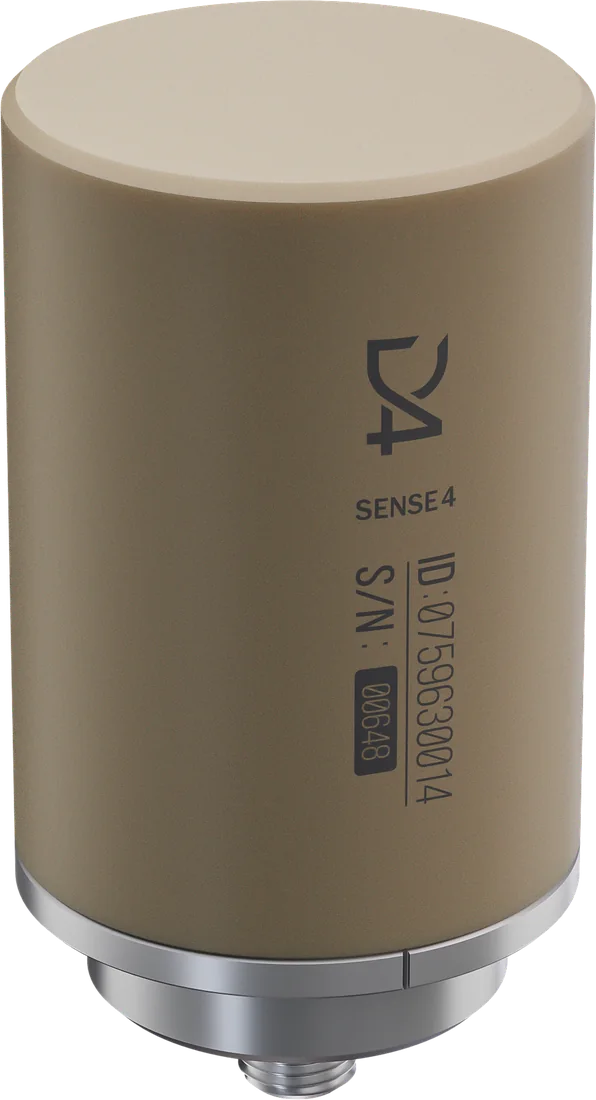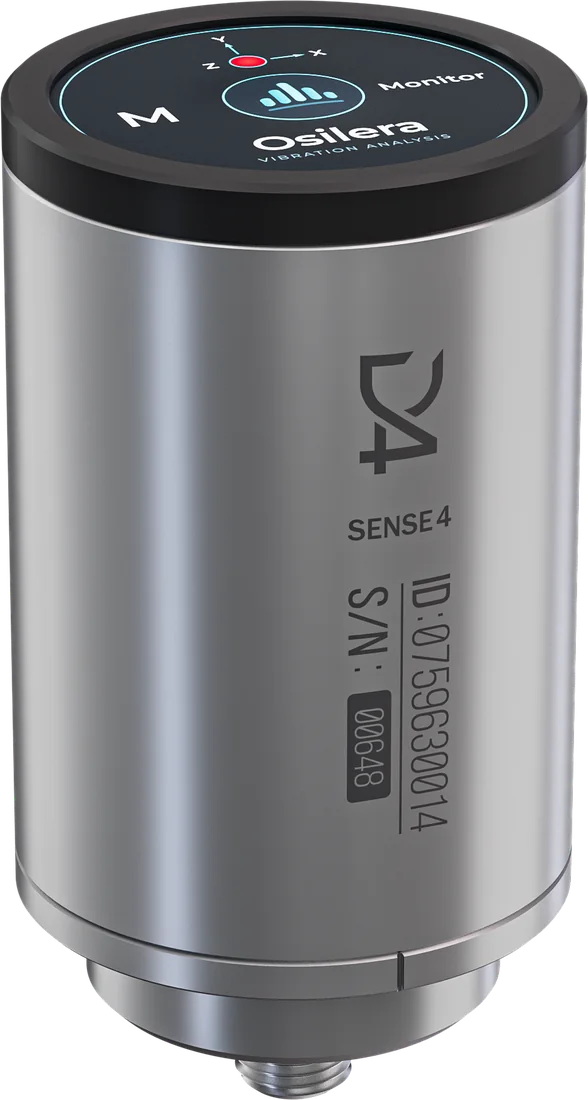
Know which roll needs you before the line has to stop.
A wireless sensor on every roll bearing and one clear view of the whole line: which bearing is changing, how fast, and what to do next.
- Wireless mesh
- No speed sensor
- No calibration
- Corrosion-ready
Roll bearings fail quietly, and a line never stops for long.
Process rolls turn slowly, often below 100 r/min, at whatever speed the strip demands. At those speeds a damaged bearing makes very little ordinary vibration, so rounds and classic velocity sensors notice late, when the bearing is already hot or loud.
The line is long, the rolls are many, and nobody wants to walk beside the tanks every week. A bearing seizes, a roll stops, the strip marks or breaks, and the stop costs far more than the bearing ever did.
Bearing band
Above 2 kHz, where bearing damage shows first, even on slow rolls.
Impact index
Rises when smooth vibration turns to knocking.
Surface temperature
Warning and alarm levels set per point.
Running or stopped
A stopped roll is never read as a healthy one.
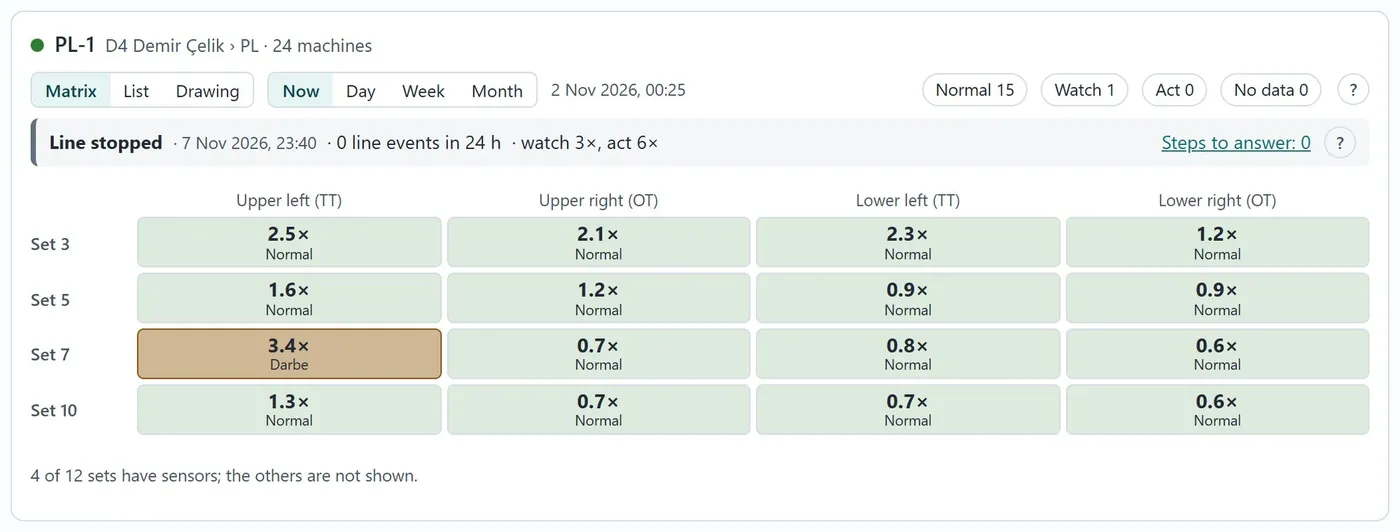
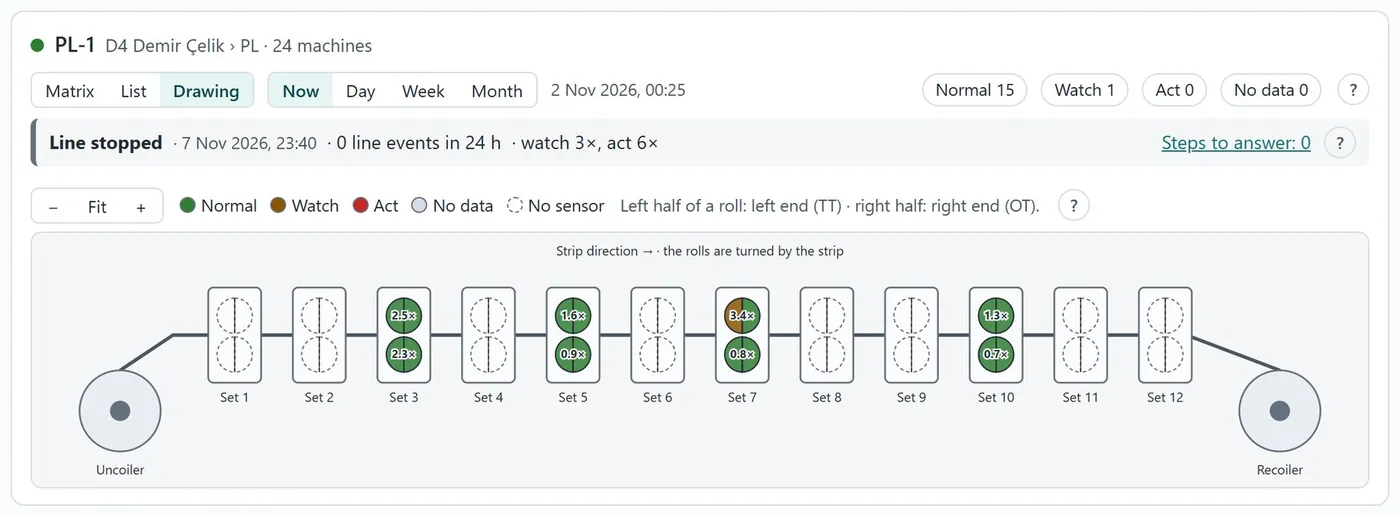
On a roll line, the one bearing that differs stands out.
Each roll is compared with the rolls doing the same job, at the same moment. When the line speeds up, the whole group rises together and nothing turns amber. When one bearing starts to change, it stands out from its neighbours.
What the line tells you, and what to do.
| Situation | What Osilera shows | What to do |
|---|---|---|
| A bearing starts to wear | Bearing band climbs while its set-mates stay flat | Watch: order the bearing and plan the roll for the next stop. |
| Damage begins to knock | Impact index rises | Act: inspect at the earliest opportunity. |
| A bearing runs hot | Temperature passes the warning level on one side | Watch: check grease, seals and alignment. |
| Left and right disagree | One side reads well above the other | Watch: start with that bearing. |
| The whole line is high | Every set rises together: an operating condition, no alarm | No maintenance action. |
Roll changes
Record a roll change. The new roll learns its normal in its new place, and a roll in the shop raises no machine alarm.
Other roll lines
Paper, film and textile lines and conveyors can be set up too. Their settings are reviewed with your process engineer.
Information, not alarms
The line comparison guides the eye. Each sensor's own alarms keep working as before.
Two bodies for the whole line.
- Corrosive areas: stainless steel base with a PEEK cap, for the pickling section.
- Regular use: aluminium base and sides with a Kestamid cap, for the rest of the line.
- No cabling along the line: the sensors join a wireless mesh to a plant gateway. Any rotation, no calibration.
- No speed signal: no tachometer and no PLC connection needed.